
The Knot Worldwide
The Knot Lifecycle Modular System
Seven landing pages written by seven teams to seven briefs. The system replaced pages, not components — and the consolidation was the design work.
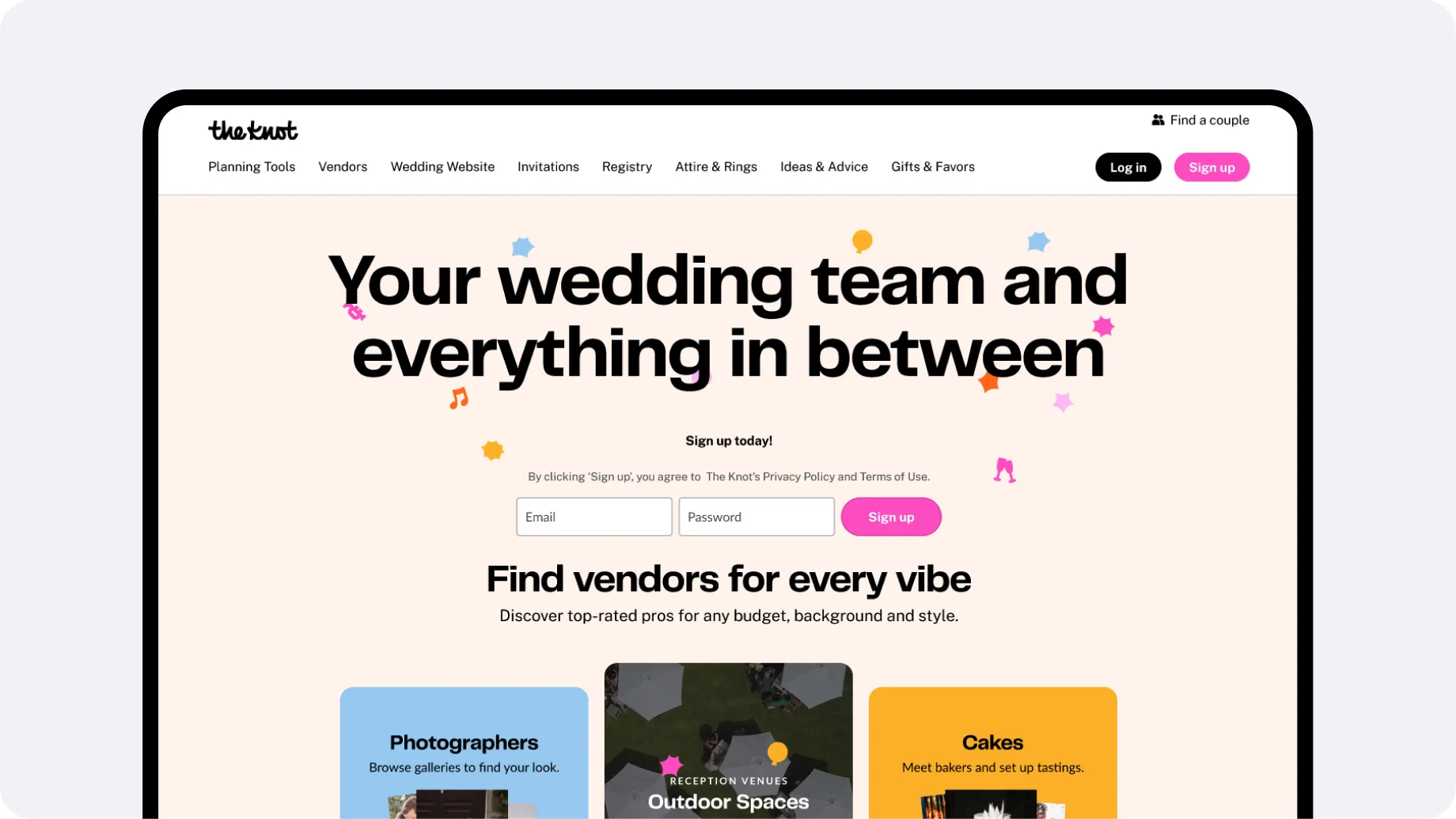
+5%
pre-HVAs across seven pages
7 → 1
sources engineering maintains
7 functions
reconciled into one promise
- Role
- Senior Product Designer — Global Growth Zone
- Timeline
- Global Growth Zone, Apr 2022 – Jan 2025
- Team
- Product, Data, PMM, SEO, UX Writing, Brand, User Research
- Tools
- Figma, Jira, Confluence, Miro
Impact:
- +5% in pre-HVAs across the seven pages
- Marketing composes and adjusts a page per tool without opening a design request
- Engineering maintains one set of blocks instead of seven bespoke pages
The Challenge
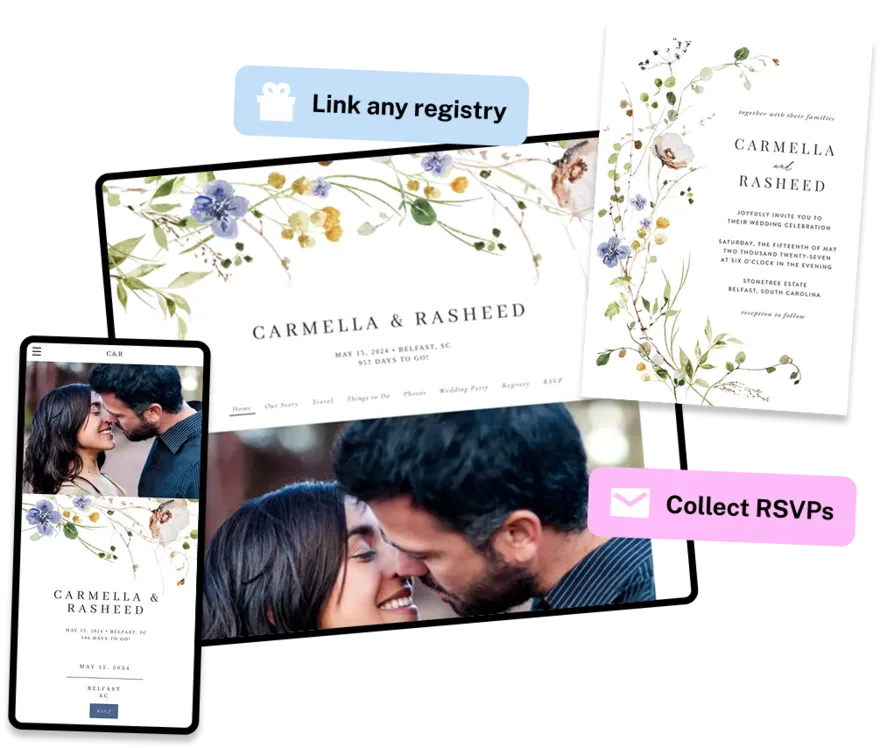
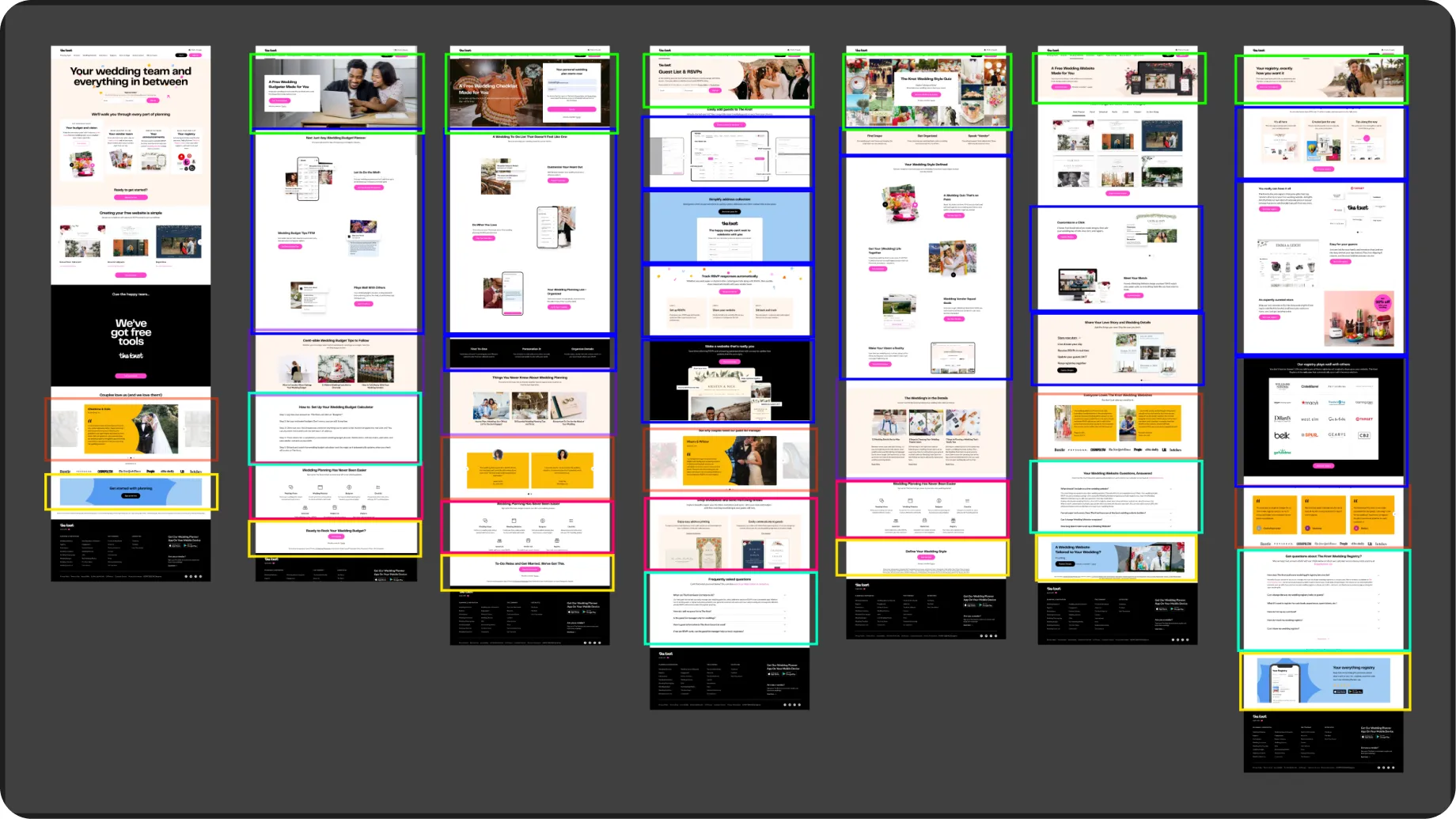
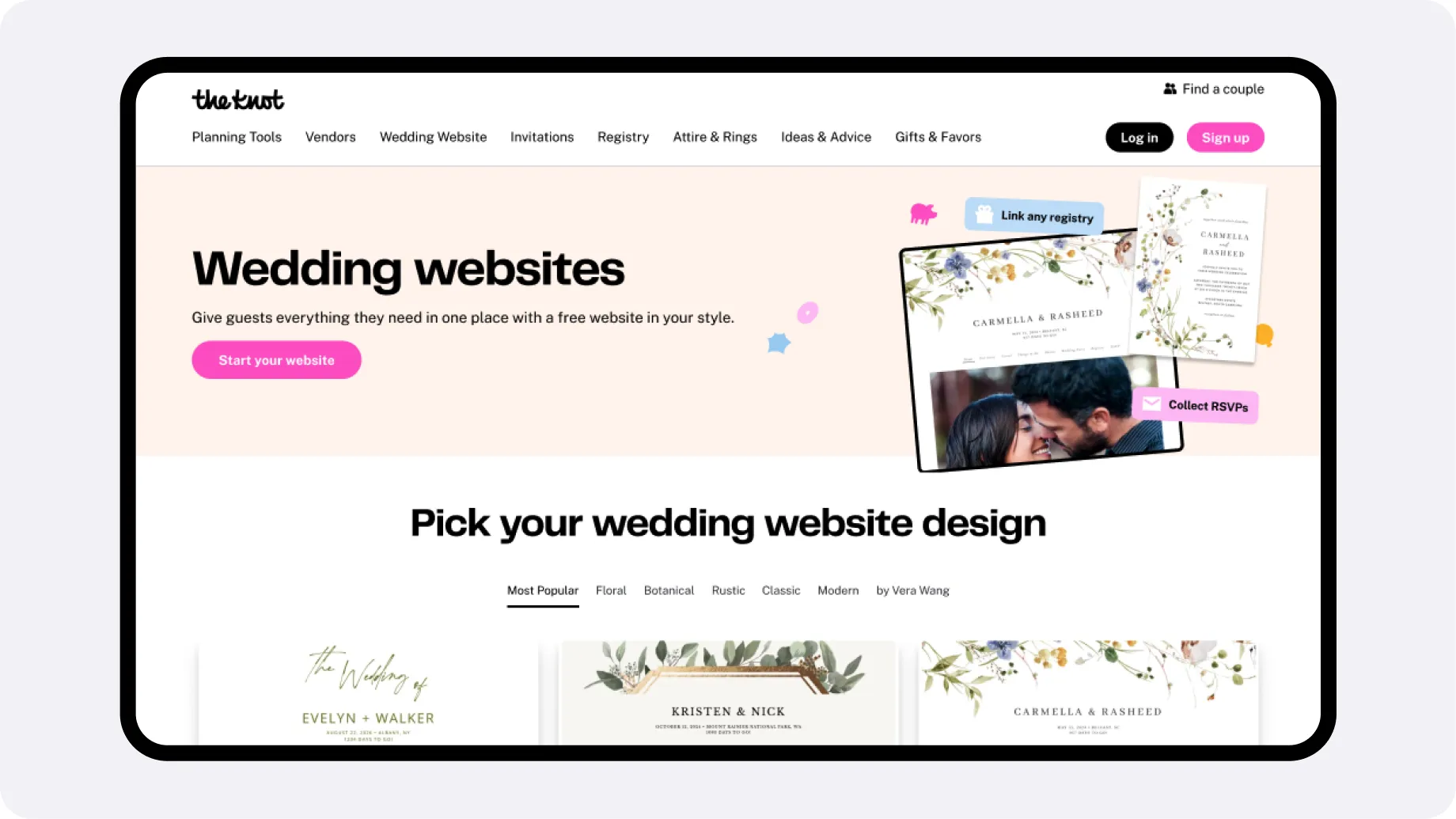
The Knot’s planning tools each had a landing page — seven of them. Every one had been written at a different moment, by a different team, to a different brief: legacy messaging, outdated visuals, inconsistent CTAs, and no two pages making their promise in the same shape.
The hard part wasn’t layout. The knowledge needed to fix those pages was spread across seven functions — Product, Data, PMM, SEO, UX Writing, Brand and User Research — and each one had its own version of what value each tool delivered. There was nothing to reconcile them against, so nobody maintained them together.
Key Constraints
- Seven functions, seven versions of the truth. Before anything could be designed, the research had to be consolidated and a single value proposition agreed per tool.
- Marketing needed flexibility per tool. A single locked template would have solved engineering’s problem by creating marketing’s.
- Engineering needed one source. Seven hand-built pages meant every fix was seven fixes, so nobody made them.
- These were live, converting pages. A rewrite of surfaces already carrying traffic, not a greenfield.
Approach & Decisions
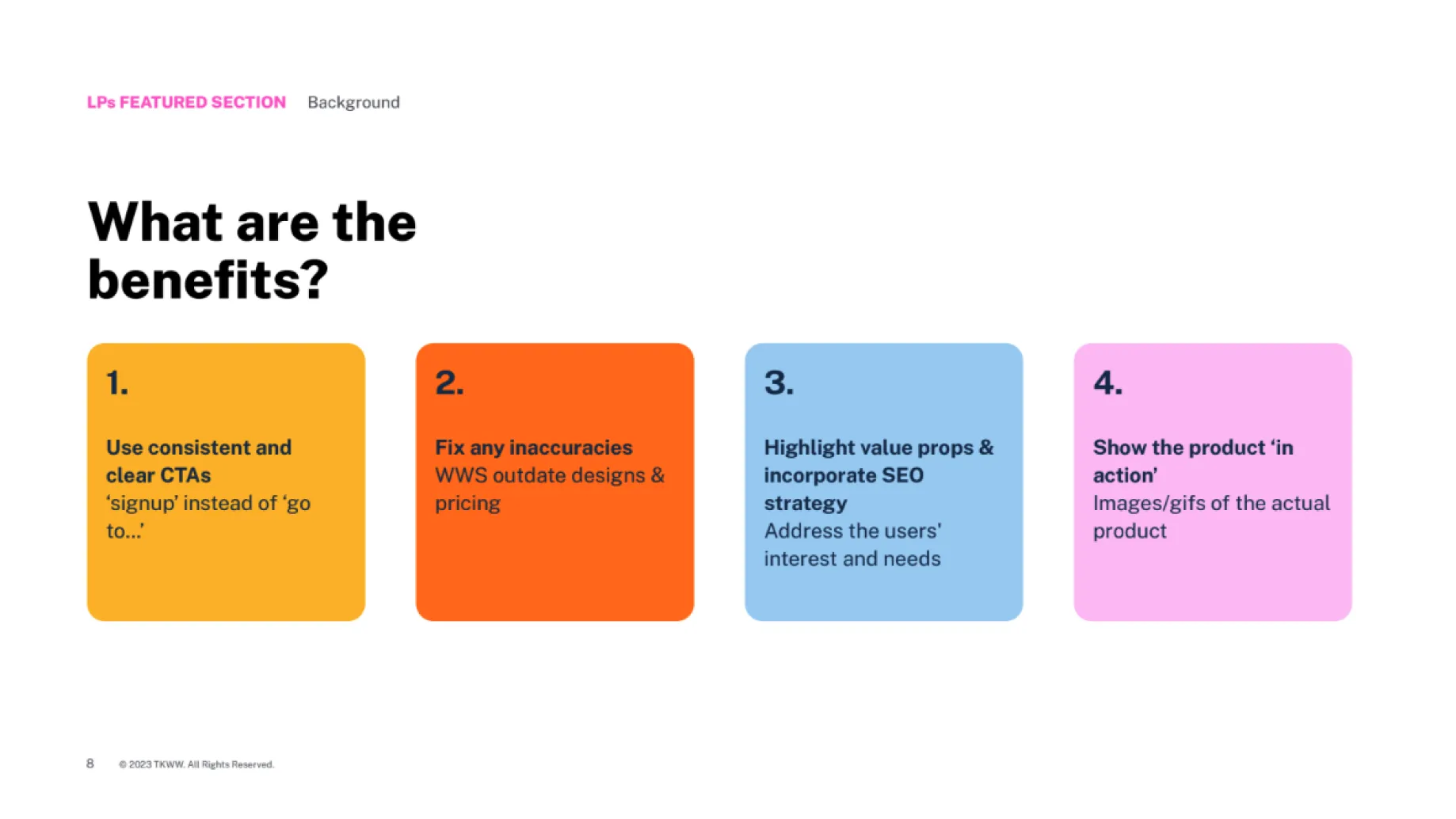
Consolidate before designing. I gathered the research scattered across the seven functions and rewrote each page around the value propositions users actually named — not the ones the company wanted to tell. That reconciliation was the real design work; the layout followed from it.
A system of sections, not a template
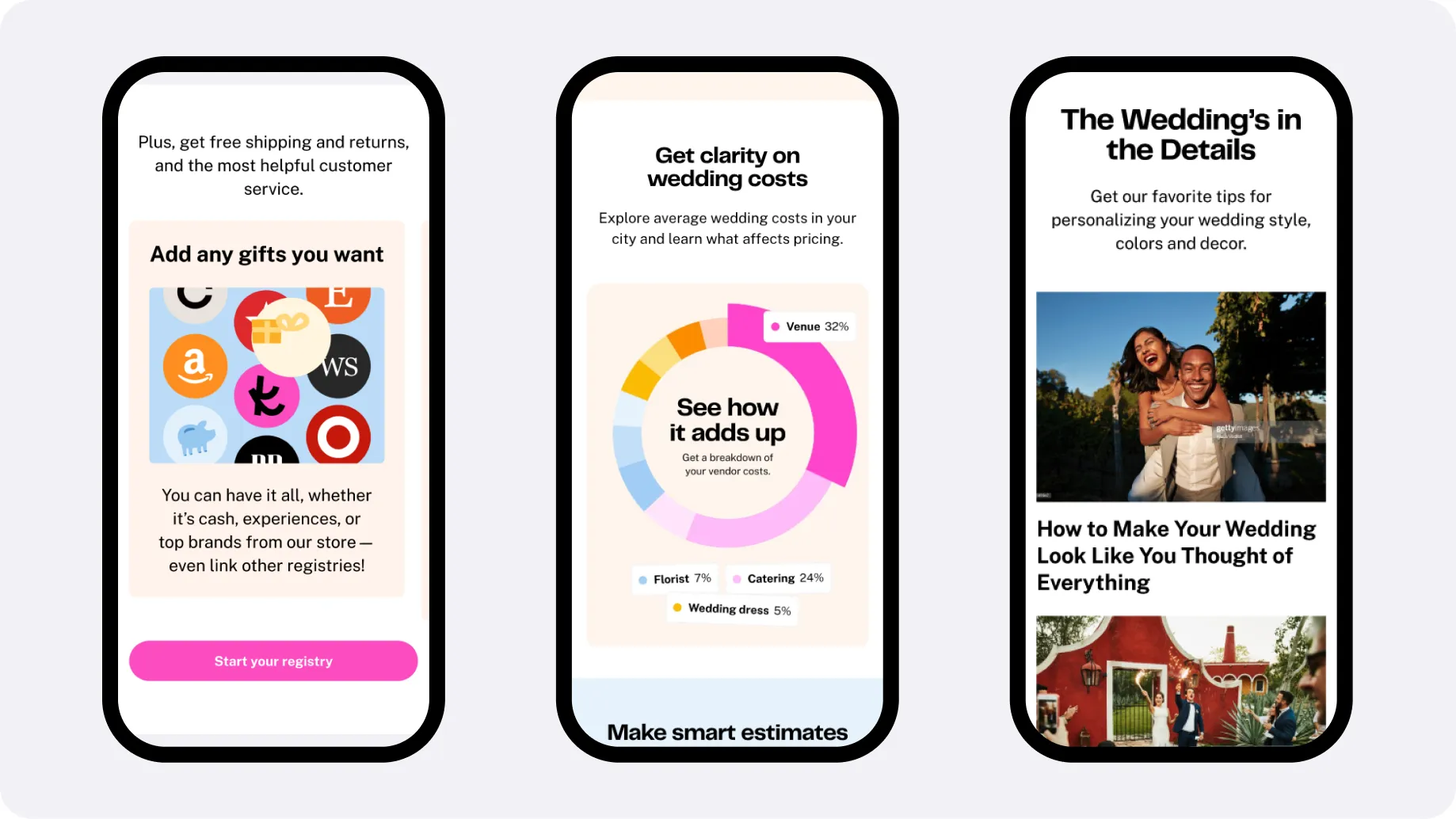
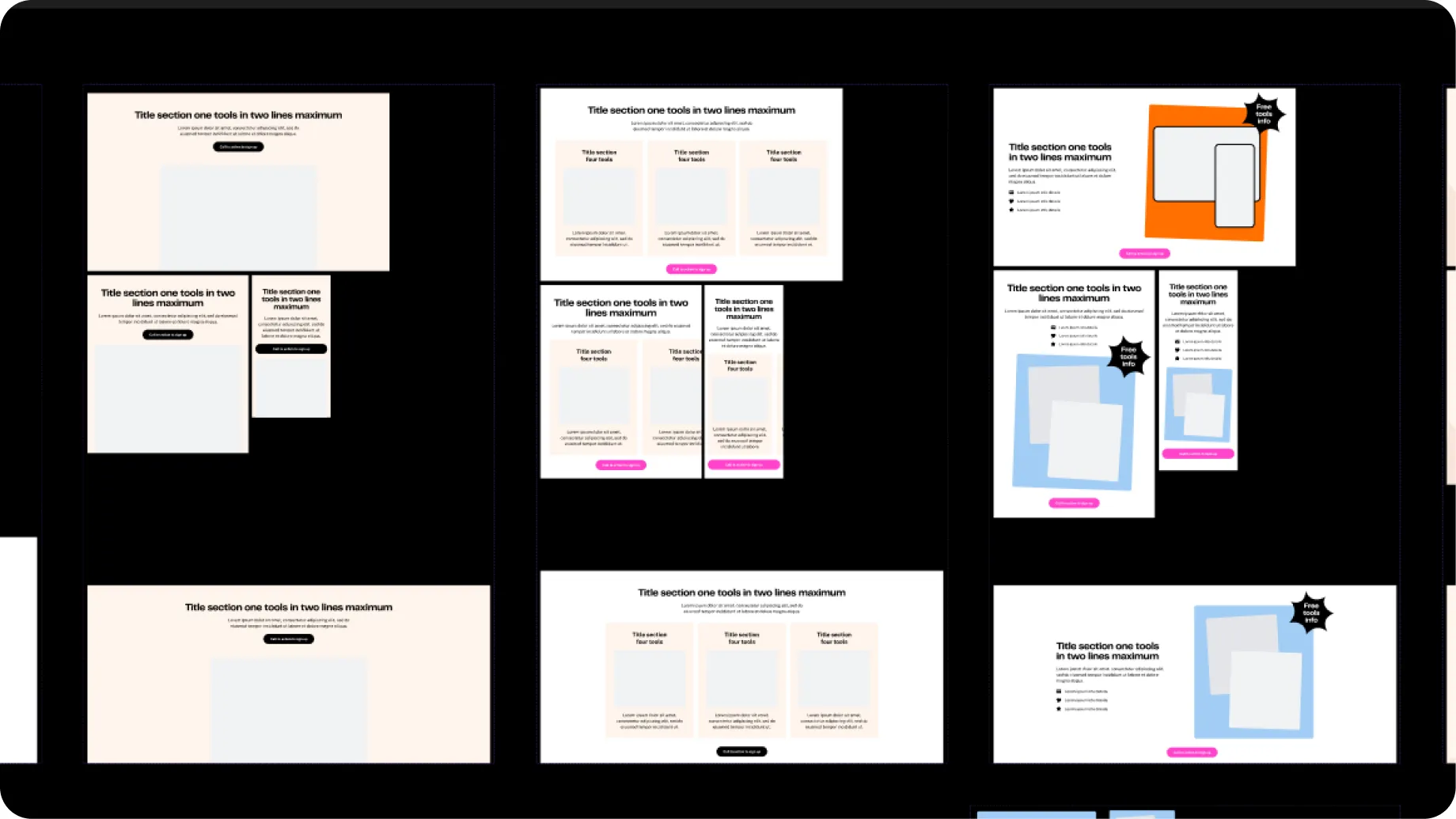
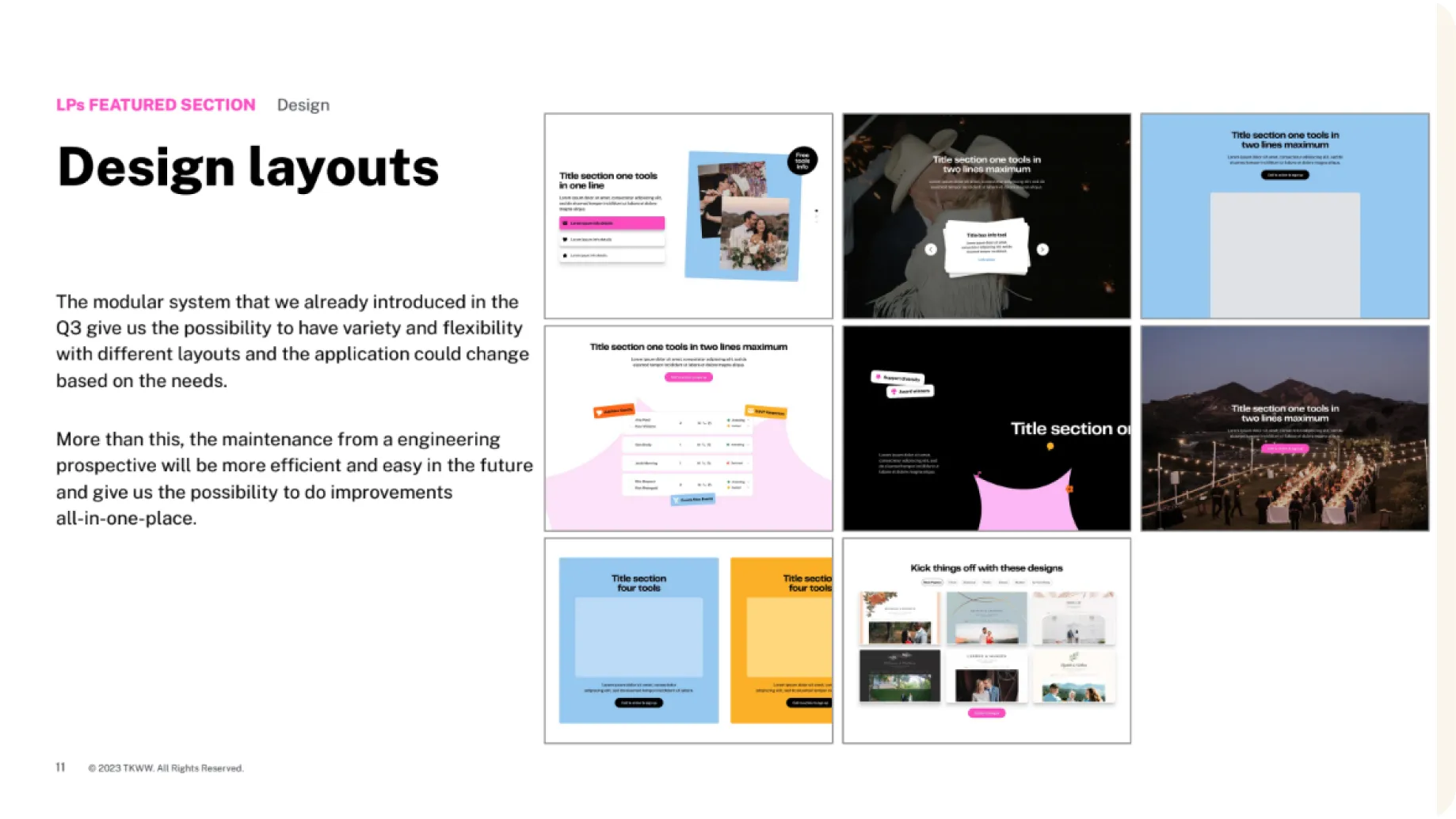
The output isn’t one page design applied seven times. It’s a set of composable section blocks. Each team composes its own page from them, so marketing keeps the flexibility it needs per tool while the blocks themselves live in one place.
One artifact, three consumers. Marketing gets autonomy, engineering gets a single source to maintain, and the user gets the same promise in the same shape across every tool. It’s the same argument I make today with design tokens — a system earns its keep when three different people stop solving the same problem separately.
Results
The system replaced pages, not components.
- +5% in pre-HVAs across the seven pages
- Marketing flexibility per tool — campaign changes no longer queue behind design
- Single-source maintenance for engineering — one fix, not seven
- Coherence for the user — the seven tools finally read as one product
What I Learned
- A design system isn’t a component library — it’s whatever stops knowledge from being rebuilt from memory. Here the knowledge lived in seven heads and ended up in shared blocks.
- Composition beats templates. One locked layout would have traded marketing’s problem for engineering’s. Blocks gave both what they needed, which is why the system survived contact with campaign work.
- Consolidation is design work. The hardest part wasn’t the page — it was getting seven functions to agree on what each tool was for.