

Book — Amazon KDP, June 2025 · written in Spanish
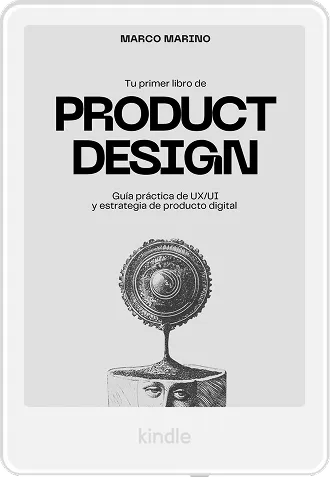
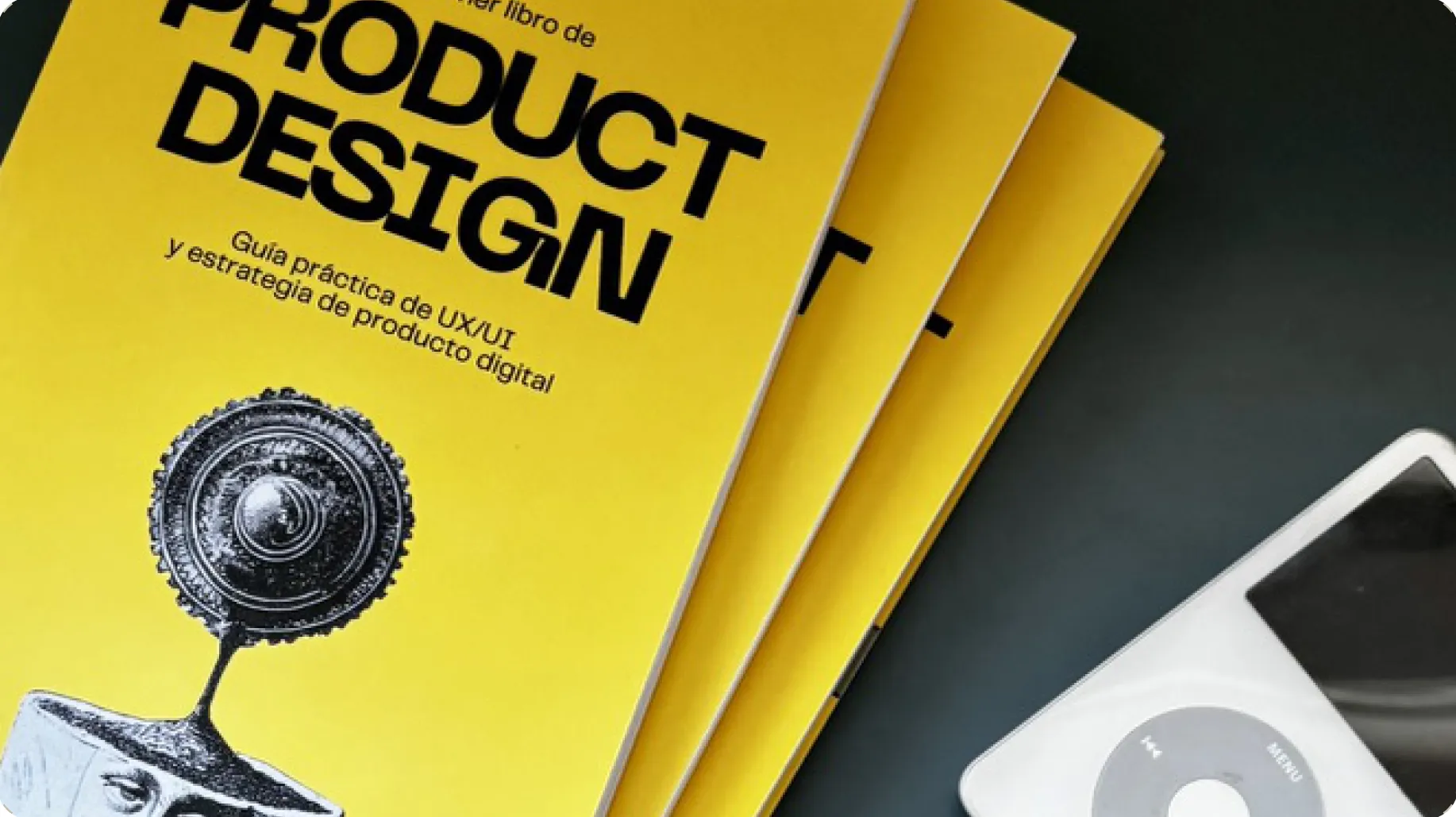
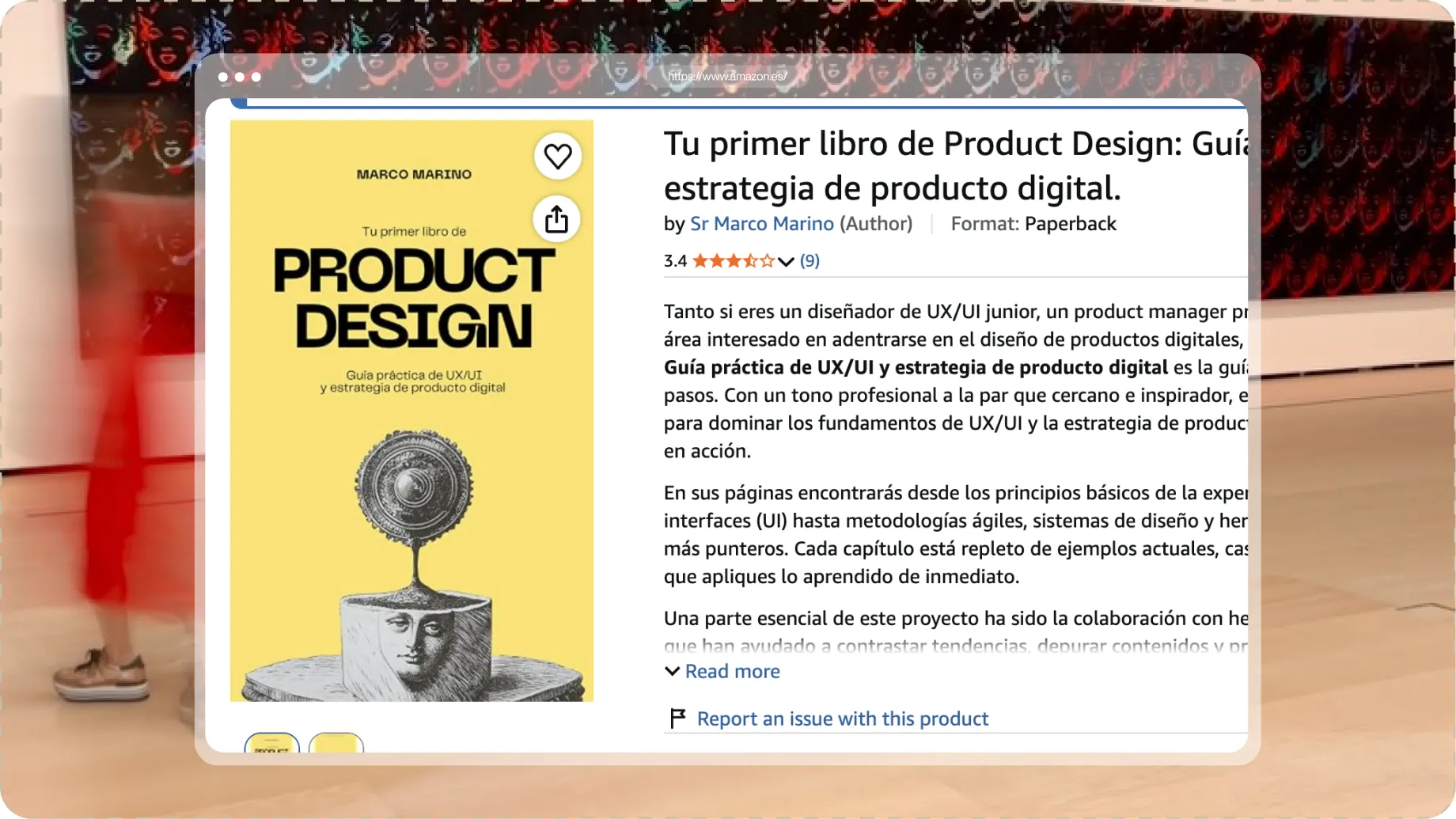
Tu primer libro de Product Design
A practical guide to UX/UI and digital product strategy. 144 pages on product design as a decision system — one that sits next to the business, the code and the data. Argued with real, verifiable cases, not generalities.
144
pages · 12 chapters
29
companies as evidence
4
countries with readers
Print + eBook
Amazon KDP
- Title
- Tu primer libro de Product Design — Guía práctica de UX/UI y estrategia de producto digital
- Published
- 19 June 2025 · Amazon KDP, paperback and Kindle
- Language
- Spanish. Readers in Spain, the United States, Mexico and Germany
- Author
- Marco Marino — written, edited and published independently
The thesis — Product design stopped being "making the buttons nice" and became a system of decisions that sits alongside the business, the engineering and the data. The thread through the book is one sequence — listen → define → collaborate → prototype → test → measure → scale — and one conviction: no recipe replaces critical curiosity, and design doesn't end at "Publish". It ends when you can confirm, with data and with human stories, that someone's life flows a little better.
Every chapter argues with a real, checkable case instead of a generality: Atlassian, Shopify, Spotify, Monzo, Duolingo, Calendly, Slack, Airbnb, Intercom, Netflix, Notion, GitLab, Canva, Microsoft.
Why it's on a portfolio
Because it is the same way of working as the case studies, written down before any of them. The metric never travels alone; it comes with the constraint that made it hard and the decision that was taken. That is how Rightboat is told, how the Style Quiz was tested, and it is the argument of the book.
For a hiring team, it answers a question a case study can't: not "can he ship", but does he have a method he can explain to other people. Twelve chapters of explaining it is a longer answer than an interview allows.
What it covers
Chapter titles translated from the Spanish. The book is only available in Spanish.
- A new way to design — design as a strategic decision, not an aesthetic one. Atlassian measuring how a UX improvement cut support tickets by 18%.
- Listen before you design — research doesn’t precede design, it is design. Netflix and the “Play Something” button.
- Define problems, discover opportunities — separate the problem from the solution; prioritise by relevance, feasibility and coherence. Slack choosing embedded threads over a costlier side chat.
- Designing is collaborating — the file as a surface for co-authorship, not a solitary hand-off. Dual-track agile and Slack’s #design-critique channel.
- From idea to prototype — the prototype as an imperfect torch that invites critique. Spotify’s twenty-plus prototypes for Blend.
- Test to learn — testing looks for friction, not approval. Shopify renaming “product variant” and cutting abandonment by 14%.
- Interfaces that think about people — cognitive load, progressive clarity, design systems as shared grammar, accessibility as part of the design.
- Experiences, not just screens — context of use and the same principles carried into full journeys. Intercom, Monzo, the Microsoft Adaptive Controller.
- Bringing the product to life — from design to shipped product.
- Measure, learn and evolve — what to measure after launch, and how to act on it.
- Charting the product’s course — strategy and roadmap from the designer’s seat.
- Design that scales: systems, operations and culture — design systems, DesignOps and the culture that keeps them alive.
What it doesn't cover, on purpose
It was written before the past year's shift in generative AI applied to design. The process it describes — listen, define, collaborate, prototype, test, measure, scale — holds without changes: it is method, not tooling. What it does not cover, and what a second edition would have to add, is the part I have spent this year building instead of writing about:
- AI as a research copilot — interview synthesis and synthetic personas, which became Synthetic Users Lab.
- AI-assisted prototyping — beyond Figma, ProtoPie and hand-written code, which is what the book covers.
- Design agents and design-to-code pipelines — the territory of the Rightboat design system, built and validated in a React prototype, with Code Connect mappings written and validated, not published.
A book that claims to be current about tooling is out of date the week it prints. This one claims to be right about method, and a year later it still is.
Who it's for
Designers making the jump from screens to product decisions; product managers and founders who want to understand what they are actually asking a designer for; and Spanish-speaking teams that have had to read all of this in English until now.
And for a hiring team: twelve chapters that show how the work gets done before the portfolio shows what got done.